
 Feedback
How to Choose the Right Roof Hatch for Your Building
Posted by Best Access Doors on 31st Aug 2017
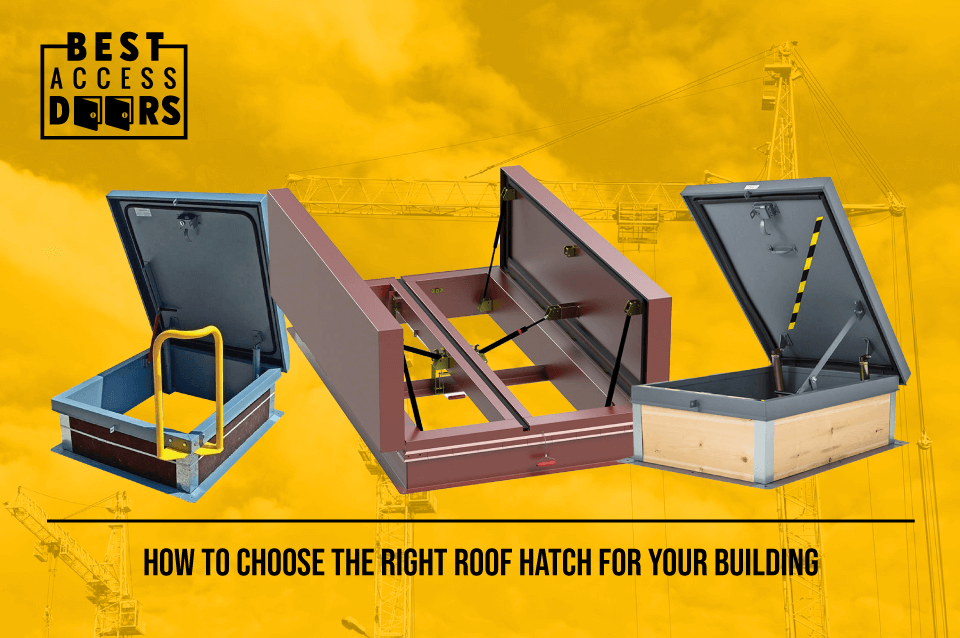
If you find that your place of business requires you to go up on the roof frequently, you may be dragging ladders, leaning them against the building rooftop, and climbing up, rain or shine. In commercial buildings where you have this kind of situation, it's time to consider installing a roof hatch in your workplace.
Having A Roof Hatch Makes Access Easier
Roof hatches are horizontal doors that provide covered roof openings, depending on building type, and are accessed through an interior ladder, service stair, or ship stair.
Step #1: Determine the Purpose
Since there are various roof hatches on the market for commercial buildings, it is essential first to determine the purpose of your roof hatch to help you narrow down your choices.
Here are some factors to help you determine which type of roof hatches you need.
Is the Access Required for Personnel or Equipment?
The purpose of the roof hatch is a primary factor to consider, as it will make a huge difference in your choice.
Step #2: Determine the Size
If the hatch is for personnel access, then a small, single-cover roof hatch will be fine for you. You then need to specify the ladder access - whether a fixed, ship, or service stair.
If the person accessing the roof hatch will be carrying extensive tools or spare parts onto the roof for regular roof maintenance, then considering a large hatch will suit your needs.
Equipment access hatches are larger than personnel access hatches and are typically double-cover models.
Most of the equipment hatches are custom-manufactured based on the type and dimensions requirements. These measurements will determine the exact size of the hatch.
In customizing the equipment access hatch, the manufacturer will verify the hatch's clear opening and hardware locations. And in some cases, custom hardware is required.
For example, a hatch installed in a hospital room with a Magnetic Resonance Imaging (MRI) machine requires non-magnetic hardware.
Is it a brand-new installation or a replacement for an older roof hatch?
If there is already a hatch installed and it no longer serves its purpose, it might not be a big deal to get it back on track and operational again.
Step #3: Determine the Type
Some available low-profile replacement hatches are ideal for retrofit applications. To avoid the need to replace the roofing material, cap over the existing hatch curb.
Once the old hatch cover is removed, mount the new one onto its existing hatch curb, and, together with the flanged and gasket insulation design, you can ensure a watertight roof hatch installation.
On What Type of Facility Will the Hatch Be Installed?
Your choice of roof hatch will vary depending on the type of building.
For example, if your space is a bank or pharmacy, you need a high-security hatch to protect against unauthorized access.
A high-security hatch with high-quality and heavier gauge material, with several enhanced security design options. Some available features on a high-security roof hatch are:
- Gun ports
- Bulletproof view windows
- Deadlocks
Another instance of a specialized roof hatch is in dark working environments, mainly industrial and manufacturing buildings.
Having a small transparent portion in the roof will allow daylight to illuminate these kinds of spaces. And there is a roof hatch that will serve this purpose.
Having a roof hatch with a polycarbonate dome cover design will allow natural daylight into the building, provide a more pleasant working environment, and help to reduce energy consumption and costs.
Step #4: Choose the Material
Another main factor to consider is the presence of corrosive elements in chemical plants or in buildings located in coastal areas, where weather conditions can sometimes be extreme.
In buildings where corrosion is an issue, high-corrosion-resistance materials are suitable in these facilities, such as aluminum or stainless steel roof hatches and copper roof hatches, which provide an aesthetic look for a historical building structure.
Stainless steel, aluminum, and copper roof hatches are more expensive than hatches made of other materials.
What Should You Look For in a High-Quality Hatch?
The majority of roof hatches are made from galvanized steel because it is the least expensive material. However, you can also specify customized hatches made from aluminum, stainless steel, and even copper.
Once you have decided on your material, there are four factors to consider when choosing the proper hatch.
Step #5: Choose the Opening Mechanism
Is It Easy to Use?
Ease of use is an essential consideration when selecting a roof hatch.
It will help if you inspect the hatch that opens easily upward from inside, especially since a staff member will rarely stand on the ladder or stairs to open the roof hatch. And when they do, usually with tools in their hands.
So it is better to have a hatch with a uniform opening mechanism to ensure safe, easy opening and closing of your roof hatch.
Is There a Need for Mechanical Help in Lifting the Hatch?
Install compression springs or other counterbalancing components during operation, especially if the cover is large and heavy.
The roof hatch needs an automatic-open lock to hold the cover open. It is a safety feature that prevents the slam shut of the hatch cover at any time and mitigates accidents during hatch operation.
Step #6: Select Insulation Options
Does It Help, or at Least Maintain, Energy Performance Levels in the Building?
Ensure that the hatch corners are fully welded and that complete insulation is provided in both the cover and the curb. Some manufacturers offer insulation options to enhance thermal performance.
It needs to check whether the cover overlaps and whether the gasket fits snugly into the roof hatch cover to ensure the hatch is watertight and weathertight.
Step #7: Determine Safety Requirements
Does It Need Fall Protection Railings?
OSHA standards require fall protection railing; you can turn to the experts to better understand how it will affect the installation of your roof hatch.
All of these guidelines will help you in choosing the proper roof hatch for your building.
Conclusion
Selecting the appropriate roof hatch for your building is crucial to ensure functionality, safety, and convenience. When making this decision, consider the BA-TRH Galvannealed Roof Hatch as a top choice, offering durability, weather resistance, and easy rooftop access.
By choosing this high-quality roof hatch, you can enhance the overall efficiency and accessibility of your building. We offer a wide selection of access doors and panels, including the BA-TRH Galvannealed Roof Hatch. Make an informed decision and ensure the utmost satisfaction with your roof hatch choice. Contact us today!
Share our story - the 2025 version is available