
 Feedback
Which Access Panels Work Best in Exterior or High-Moisture Commercial Zones?
Posted by Best Access Doors on 10th Apr 2026
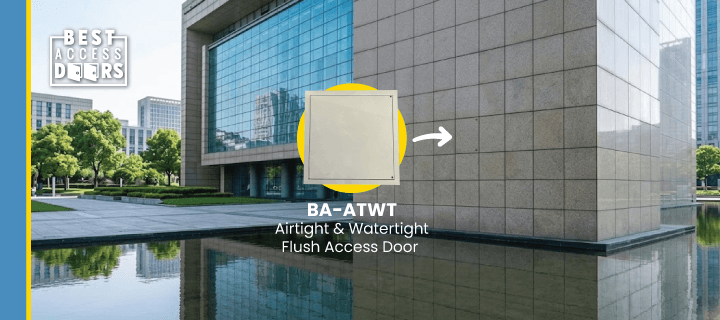
Exterior and high-moisture commercial zones perform best with gasketed, weather-resistant access panels that resist corrosion and maintain a tight seal.
These areas are often exposed to water intrusion, air leakage, and premature rust. A standard interior access door can quickly become a weak point here. The problem is that standard panels aren't designed to protect the building envelope when moisture, pressure, and exposure are factored in.
In this post, we’ll explain where gasketed exterior access panels are most beneficial and what features matter in high-moisture or exposed conditions. We'll also feature the BA-ATWT access panel, a product that supports moisture-aware access in demanding commercial applications.
Why Are Exterior and High-Moisture Zones High-Risk Areas for Access Panels?
Exterior walls and wet service areas are considered high-risk because they are the primary battleground for building envelope integrity. In these zones, access panels act as intentional punctures in the building's protective skin.
If installers don't seal those punctures as they would a window or a door, the entire system fails.
Exterior access panels are constantly subject to driving rain, pressure-driven air leakage, and fluctuating temperatures that cause materials to expand and contract. Access panels here become the weak link in a commercial project because they interrupt three critical systems:
- The air barrier
- The water-resistive barrier (WRB), and
- The insulation continuity
In the field, this looks like unsightly rust streaks bleeding down a multi-million-dollar facade, or mold blooming on the interior drywall behind the panel. You might see repeated attempts to fix the leak with layers of field-applied caulk, but without a mechanical seal, these are just band-aids.
Eventually, freeze-thaw exposure turns trapped moisture into ice, expanding and cracking the surrounding substrate. The result is structural damage that extends beyond the frame itself.
Stop risking your building efficiency with standard doors. Seal the envelope against the elements with our weather-resistant access solutions. Explore our full range of exterior access panels to ensure a zero-leak performance on your next project.
What Features Define a Weather-Resistant or Moisture-Ready Access Panel?
A truly weather-resistant access panel must maintain a seal under pressure and resist environmental degradation. When specifying for these zones, look for these defining characteristics:
1. Corrosion Resistance
Choose materials and finishes that can withstand humidity, exposure, and repeated service access. Stainless steel and aluminum are common choices for corrosive environments. Think coastal builds, commercial kitchens, or damp mechanical areas.
Heavy-duty steel construction can also deliver reliable performance in high-moisture zones.
When they include corrosion-resistant finishes and a gasketed, watertight seal, they become a strong option for exterior and moisture-prone applications. This is especially true if the risk is more about water intrusion and sealing than constant chemical washdown.
2. Air and Water Barrier Continuity
The panel must act as a seamless extension of the WRB. This means the frame design should allow for proper flashing integration to shed water away from the opening.
The most vital feature here is a gasketed construction.
Unlike standard access doors that rely on a metal-to-metal fit, moisture-resistant access panels use high-quality EPDM or neoprene gaskets to create a physical compression seal.
This remains effective even after the door has been opened and closed hundreds of times. A good seal should ensure smooth commercial lifecycle maintenance for years to come.
3. Hardware with Compression
A simple cam latch usually closes the door, but it doesn't reliably compress the gasket—and that's the difference between closed and sealed.
For exterior and high-moisture zones, you want heavy-duty compression-style latching that pulls the panel tight to the frame. That consistent pull is what creates even gasket contact across all four sides. It doesn't leave small gaps at the corners or along the hinge edge, so no air leakage or wind-driven rain can enter the assembly.
4. Freeze-Thaw Durability
In climates with freezing temperatures, access panels must handle repeated expansion and contraction without breaking the seal.
If the panel, frame, and surrounding materials expand at different rates, sealant joints can crack, and gaps can open. This allows water to enter, freeze, expand, and cause progressive damage around the access opening.
Lifecycle durability comes from:
- A gasketed seal that's continuous around the perimeter.
- A rigid frame that stays square so the door stays aligned.
- Compression latching that keeps the gasket evenly engaged through temperature changes.
Related: How To Choose Panels That Match Your Climate & Code
When Should Exterior Access Panels Be Coordinated to Prevent Moisture-Related Failures?
For maximum effectiveness, commercial exterior access solutions must be coordinated during the pre-construction or rough-opening phase.
If you wait until the cladding is installed to consider the access panel, it's already too late to integrate the flashing properly. Coordination should happen before the WRB (Water-Resistive Barrier) and insulation are finalized.
Contractors and project managers should align the panel installation with:
- The Envelope Consultant's Details: Ensure the panel's flange type matches the intended drainage plane.
- Waterproofing Subcontractors: The person responsible for the wall's air barrier should also seal the panel frame to that barrier.
- Sequencing: Avoid the common mistake of cutting in a panel after the finishes are complete. This creates a surface-mount situation that relies entirely on a bead of caulk for waterproofing.
Proper early-stage coordination also ensures inspection readiness. When an inspector sees a gasketed, specialized panel integrated into the flashing, it signals that the building envelope has been treated professionally.
Related: Protect Your Infrastructure with Our Waterproof Access Doors and Corning's Weatherproof Materials
Where Are Gasketed Access Panels Most Critical in Commercial Buildings?
Gasketed access doors are essential anywhere there is a significant pressure differential or a high concentration of water vapor. While exterior walls are the most obvious application, many interior zones function as microclimates that demand the same level of protection.
If an area involves washdown procedures, steam, or chemical exposure, treat the access opening as a mini-envelope penetration.
Such zones include:
- Rooftop Mechanical Screen Walls: Exposed to high winds and direct precipitation.
- Parking Garages and Stair Towers: Face humidity and de-icing salt spray from vehicles.
- Pool Facilities: The high chlorine content and constant humidity will eat through standard steel doors in a matter of months.
- Commercial Kitchens: Require panels that can handle daily moisture cycles.
- Janitor Closets: Mop sinks and chemical storage create a corrosive, humid environment.
Related: Why Choose a Corrosion-Resistant, Lightweight, and Insulated Access Door?
How Does BA-ATWT Perform in Exterior and Damp Commercial Applications?
The BA-ATWT Airtight & Watertight Flush Access Door provides a tight seal that blocks air leaks and water intrusion in high-risk commercial areas. Its performance comes from heavy-duty construction designed for sterile, humid, and weather-exposed environments.
- Laboratory-Grade Sealing: The panel is tested for air and water infiltration in accordance with ASTM E283 and ASTM E331 standards, making it a reliable barrier for highly hygienic rooms.
- Heavy-Duty Construction: Both the door and frame are fabricated from 16-gauge steel, ensuring the panel won't warp or crack under pressure.
- Advanced Gasketing: The unit features a specialized EPDM coextruded trim seal. This gasket provides a consistent, airtight, and watertight compression seal between the door and the frame.
- Structural Integrity: All connected parts are continuously welded, eliminating the micro-gaps found in standard panels. This prevents moisture from seeping into the wall cavity through the frame's corners.
- Precision Hardware: The door utilizes a continuous piano hinge and stainless steel screws to maintain a high-pressure seal across the entire surface.
- Versatile Material Options: Available in a rust-inhibitive powder-coated steel or a No. 4 finish stainless steel. These provide the necessary corrosion resistance for coastal or high-moisture rooms.
Eliminate callbacks and ensure your project is ready for the most rigorous envelope testing. Request a quote for the BA-ATWT to get a flush, fully gasketed solution that helps you stop moisture infiltration and meet your tightest project deadlines.
FAQs about Weather-Resistant Access Solutions
1. Can I paint a weather-resistant door without ruining the seal?
Yes, but carefully. Most weather-resistant access panels can be painted as long as you don't coat the gasket, latch surfaces, or sealing edges. Paint buildup at the compression points can prevent the door from closing evenly, weakening the gasket seal and increasing the risk of air leakage and water intrusion.
2. Does this panel meet the International Building Code (IBC) for exterior penetrations?
The IBC doesn't approve a specific exterior penetration access panel the way it does for fire-rated assemblies. Instead, it requires the entire wall assembly to meet performance expectations for water resistance, weather protection, and (where applicable) air barrier continuity. For projects with strict envelope requirements, it's best to confirm the panel's published test data against your project specifications.
3. What happens to a gasket in freezing temperatures?
In freeze-thaw climates, high-quality materials like EPDM stay flexible in cold conditions. Coupled with compression latching, the panel can maintain compression even as temperatures swing.
4. Where do exterior access panels commonly leak in commercial walls?
Leaks typically occur at the top corners of the frame where water "ponds," or through the latch mechanism if it isn't specifically designed to be watertight.
Conclusion
Exterior and high-moisture commercial zones demand more than a standard interior access door. They require gasketed, weather-resistant panels that protect air and water barrier continuity under real exposure.
Without a true compression seal, access points become weak links that invite water intrusion, air leakage, corrosion, and freeze-thaw. The resulting damage spreads into the surrounding wall assembly, affecting equipment.
The right solution combines corrosion-resistant construction, continuous gasketing, and hardware that pulls the door into a tight seal.
Don't let a simple access point trigger inspection anxiety or costly structural repairs. Contact our team to help you select draft-free access panels that maintain building envelope integrity from the rough opening to the final walkthrough. Call us at +1-888-327-5471.
Share our story - the 2025 version is available