
 Feedback
Why Insulated Crawl Space Doors Are a Growing Necessity for Energy-Smart High-Tech and Healthcare Builds
Posted by Best Access Doors on 26th Feb 2026
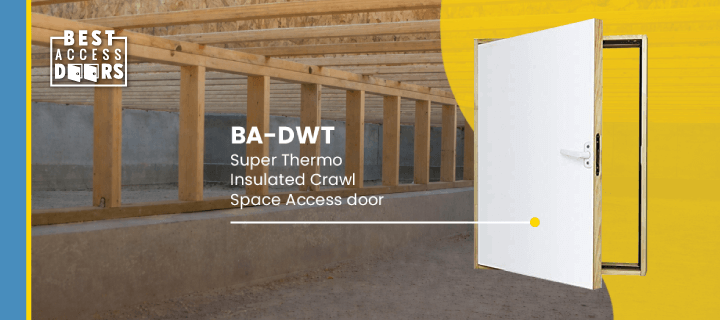
Insulated crawl space doors are essential for modern high-performance buildings because they eliminate thermal bridges and prevent moisture-driven structural damage. These specialty panels also maintain the strict air-pressure balances required in sterile and technical environments.
In high-tech and healthcare construction, uncontrolled air movement can lead to system failures or infection control breaches. In a data center, a leak can introduce humidity, threatening server uptime. For a hospital, it can compromise the air quality of an entire floor.
Installing energy-efficient access doors ensures a building's thermal envelope remains continuous and up to code. It protects both sensitive equipment and long-term energy budgets.
As building codes tighten and ASHRAE 90.1 standards evolve, the margin for error in commercial envelope performance has narrowed.
Let's take a closer look.
Why Are Crawl Spaces Becoming a Critical Focus in Energy-Smart Commercial Buildings?
Modern commercial buildings focus on crawl space integrity because these sub-grade areas influence:
- Air quality
- Humidity levels, and
- Energy consumption
By sealing and insulating these zones, contractors ensure that energy modeling assumptions align with real-world performance. These actions prevent unconditioned air from seeping upward into occupied spaces.
When a crawl space is poorly managed, its temperatures fluctuate, and it retains humidity. In a high-tech facility or modern hospital, this can force HVAC systems to work harder to compensate for the thermal bridge at the base of the building.
The result is higher energy consumption over time, which drives up utility costs.
Crawl space encapsulation and insulated access ensure proper lifecycle energy performance. Focusing on this subgrade area enables tighter air leakage control. It ensures that the basement stays as optimized as the walls and roof.
This way, every square inch of the envelope is accounted for. It's about creating a continuous barrier that stays resilient against the pressure differentials common in large-scale commercial architecture.
Protect your building's thermal envelope with energy-efficient access panels. Browse our range of insulated crawl space doors designed to prevent thermal bridging, lock out moisture, and maintain controlled environments below grade.
Related: Learn How to Encapsulate Your Crawlspace in 8 Simple Steps
How Do Crawl Space Access Doors Affect Thermal and Moisture Performance?
Crawl space access doors affect thermal and moisture performance by either being the weak link that breaks the thermal envelope continuity or the well-chosen solution that preserves it.
Heat Transfer
An uninsulated access door allows heat to transfer between the conditioned interior and the unconditioned exterior.
Take a standard steel plate door, for instance. In a crawl space, it acts like a radiator in reverse during the winter, sucking heat out of the building. In the summer, it becomes a source of condensation.
Insulated access doors use cores like mineral wool to block heat transfer between the door's surface and the room. This prevents "sweating," which can lead to mold and structural degradation.
Moisture Performance
Moisture intrusion is a primary concern in crawl spaces. Gaps around access doors can allow humid air, groundwater vapor, or bulk water to enter.
Moisture intrusion increases the risk of condensation, mold growth, and material deterioration. Access doors designed with airtight seals and corrosion-resistant materials help limit moisture migration and support healthier indoor conditions.
By specifying doors designed for weather-tightness, project teams can maintain a stable dew point within the sub-grade area. They can protect wooden joists, metal ductwork, and sensitive cabling from corrosion and rot.
Interaction with Crawl Space Design
The impact of an access door also depends on whether the crawl space is vented or conditioned. In sealed or conditioned crawl spaces, the access door must match the surrounding walls in terms of insulation values and air-barrier requirements.
In vented crawl spaces, durable, weather-resistant construction is critical to withstand temperature swings and moisture exposure.
Installation
Even the best access door will underperform if it is poorly installed. Correct sizing, continuous air and vapor barriers, proper flashing, and alignment with wall insulation are all essential to ensure long-term thermal and moisture performance.
Related: Tips on Installing a Crawl Space Access Doors
What Risks Do Uninsulated Crawl Space Doors Create in Healthcare and High-Tech Facilities?
- Infection Control Considerations: In hospitals, air pressure must be carefully managed. A leaky crawlspace door can disrupt healthcare building energy performance and pressure balance. For instance, the pressure balance in a ground-floor surgical suite or oncology ward can potentially draw unfiltered air from the soil or substructure into sterile environments.
- Equipment Longevity: In high-tech facility construction, buildings house millions of dollars in server racks and diagnostic imaging equipment. Moisture migrating through an unsealed crawl space door can settle on cold-water pipes or sensitive electronics, causing micro-corrosion that isn't visible until a system failure occurs.
- Operational Continuity: If a crawl space becomes a breeding ground for mold due to poor thermal separation, the cost of remediation in a regulated healthcare setting can be massive. The effect disrupts operations or may require the temporary shutdown of vital wings.
Prevent moisture, mold, and contamination below grade. Ensure your next project meets ASHRAE, LEED, and healthcare standards with our specialized access doors. Request a quote today or call our team at +1-888-327-5471 for any inquiries.
How Do BA-DWK and BA-ATWT Support Controlled Environments below Grade?
BA-DWK and BA-ATWT access doors are designed to support controlled environments, ensuring thermal stability, moisture management, and reliability in high-tech, healthcare, and other sensitive builds.
BA-DWK Insulated Crawlspace Access Door
This insulated commercial crawl space access door enhances building energy performance and durability in crawl spaces, basements, and other subgrade areas. It features:
- High Thermal Performance: With an R-value of 5.2 with 1 1/8" thermal insulation, it reduces heat transfer and helps maintain consistent below-grade temperatures.
- Durable Construction: The panels are made from high-density pinewood that resists pests, rodents, and general wear, ensuring long-term reliability.
- Versatile Swinging Options: The BADWK access door can swing left or right, accommodating various installation scenarios.
- Quick, Accurate Installation: It's fully assembled with pre-fitting instructions, enabling accurate one-person installation. Proper installation ensures a perfect fit, reducing drafts and moisture intrusion.
- Customizable Sizing: Best Access Doors stocks this panel in multiple sizes to fit crawl spaces and knee wall openings. For odd openings, custom sizes are also available.
BA-ATWT Airtight and Watertight Flush Access Door
This airtight and watertight flush access door is especially important for contamination control.
- Superior Contamination Control: The airtight and watertight EPDM co-extruded trim-seal prevents contaminants from entering, preserving critical below-grade environments in healthcare facilities.
- Robust Steel Construction: Its heavy-duty 16-gauge steel ensures durability and reliability, even in demanding conditions.
- Versatile Applications: The BA-ATWT is suitable for clean rooms, hospitals, laboratories, pharmaceutical facilities, and other controlled environments.
- Standards Compliance: The access panel meets industry regulations for quality, safety, and environmental control. It's tested in accordance with ASTM E283/E283M and ASTM E331 for water and air infiltration.
- Process Efficiency: Maintains optimal conditions for sensitive operations, supporting reliable performance and energy-smart design.
Related: How Do Insulated Access Doors Improve Energy Efficiency in Commercial Spaces?
FAQs About Insulated Crawl Space Doors
1. Why should I use an insulated crawl space door instead of a standard steel door?
Standard steel doors allow heat to escape and moisture to condense on their surfaces, leading to mold and rust. An insulated crawl space door has an insulated core that maintains thermal envelope continuity. This prevents "sweating" and ensures your HVAC system doesn't have to overwork to compensate for sub-grade energy loss.
2. How do weather-tight access doors improve air quality in healthcare facilities?
In healthcare settings, infection control considerations are paramount. A weather-tight door, such as the BA-ATWT, uses high-compression gaskets to create an airtight seal. This prevents stagnant, humid, or contaminated air from the crawl space from getting pulled upward into sterile patient areas due to pressure differentials.
3. Can insulated access doors help my building achieve LEED or energy code compliance?
Yes. Modern building codes and ASHRAE 90.1 standards require a continuous thermal barrier. Using an insulated access door helps meet these requirements by eliminating the "gap" in your insulation. This supports better energy modeling assumptions during the design phase, making it easier to hit LEED certification targets and reduce lifecycle energy costs.
4. How does moisture management in the crawl space protect high-tech equipment?
High-tech facilities like data centers are highly sensitive to humidity. Specifying an energy-efficient access door ensures that the sub-floor remains a stable, dry environment. It protects the longevity and facility reliability of expensive hardware.
Wrapping Up
In high-stakes commercial construction, the crawl space can no longer be an afterthought. Protecting your building's thermal envelope requires closing every gap, starting at the foundation.
By specifying insulated, weather-tight access solutions like the BA-ATWT and BA-DWK access doors, you eliminate thermal bridging, lock out moisture, and maintain the precise pressure balances critical to healthcare and tech reliability.
Don't let a standard door undermine your energy goals or equipment safety. Choose engineered access points that support long-term compliance and operational continuity.
Contact our team today to coordinate crawl space access solutions and ensure your next high-performance project stays sealed and efficient.
Share our story - the 2025 version is available