
 Feedback
Code Compliance Considerations for Access Doors in Electrical and Lighting Systems
Posted by Best Access Doors on 5th Feb 2026
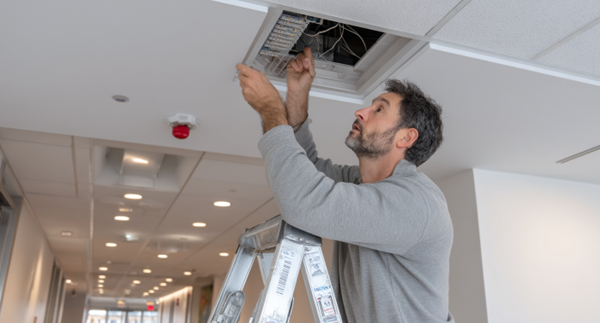
In a finished corridor, most people notice the paint, trim, and lighting. What they don’t see are the junction boxes, drivers, and control systems hidden above ceilings and behind walls.
That hidden equipment is where problems often start.
If an inspector can’t access a splice, or a technician can’t safely service a driver, safety and cost issues follow. Many projects end up cutting new holes into finished ceilings simply because access wasn’t planned early. That kind of rework is expensive, disruptive, and avoidable.
From a code and safety standpoint, any concealed electrical or lighting component that requires service, testing, or resetting must have a clear and deliberate access point. That is the real purpose of access doors and panels.
Key Takeaways
- One needs to think of every access opening serving electrical and lighting systems, as part of a regulated path and not simply a hole in the wall.
- Early coordination between design teams and field teams avoids failed inspection and costly rework.
- The right door or panel depends on what is behind it and what safety codes are related to it.
- Good documentation, repeatable details, make the maintenance of compliance much easier over the life of the building.
Fundamental Codes That Impact Access Doors
One does not need to know every word of the national electrical code by heart, but one does need to know where it bites. The NEC and associated electrical code documents dictate what can and cannot be kept accessible and how much working space is needed, as well as where electrical equipment cannot be concealed behind finishes.
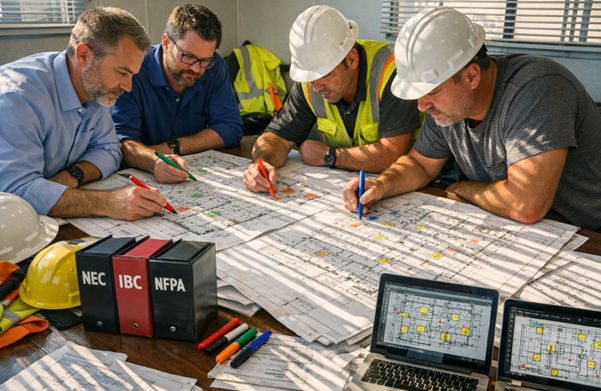
The National Electrical Code (NFPA 70) is the priary standard governing safe electrical installation and accessibility, and is widely adopted by local and state jurisdictions as the mandatory baseline for electrical design and inspections.
On the building side, international building code and life safety code, including NFPA 101, influence the operation of rated walls, ceilings and egress paths. If a rated corridor ceiling is cut into to get to drivers or controls, these openings must remain consistent with the original rating.
Local jurisdictions may add their own rules. Two neighboring cities can interpret the same layout differently. When there is uncertainty, it is best to ask the authority having jurisdiction (AHJ) and document the response.
Functional Requirements: Access, Safety and Maintainability
Think about the person that has to open that panel five years from now. Maybe it is the original installer. Maybe it is a tired night shift tech. They need enough room to work, conditions for clear lighting and zero surprises.
Inspectors pay particular attention to safe outreach, unobstructed working space and evident desirable paths to the equipment which impacts egress or to emergency lighting. OSHA electrical standards require clear working space and accessible entrances to electrical equipment, including minimum width and clearance dimensions, to ensure safe operation and maintenance. If one panel is being jammed behind a door swing or above a ladder in a cramped closet, electrical hazards and failed inspection are invited.
Poor access also increases long-term costs. When maintenance teams have to remove ceiling tiles or cut new openings just to reach equipment, repair expenses add up quickly.
Types of Access Doors for Electrical and Lighting Systems
Not every opening requires a heavy rated assembly but some absolutely do. In non-rated partitions, simple steel or gypsum access panels are often used for low voltage terminations or lighting controls and smaller junction boxes. They are fast to install and are simple to complete.
In the case of rated shafts or corridors or stair enclosures, fire doors or listed fire rated access panels matching the assembly are required. A typical example is a 2 hour shaft riser conduit and cable trays. The panel must have the same rating and both the installation and maintenance must respect the tested assembly.
Fire-rated access doorsdo not prevent fires. They are designed to slow the spread of fire and for a specific period, helping maintain compartmentation and allow safe evacuation.
In hard ceilings, it is often better to group drivers and control gear near larger, well-placed openings rather than scattering small panels everywhere. This improves appearance and simplifies maintenance.
Special Considerations for Electrical and Lighting Systems
Concealed junction boxes and pull boxes sound easy until someone has to pull new conductors. If the opening is too small or off center more gypsum ends up being cut, which defeats the whole purpose of planned access.
A practical rule: If two hands are needed inside the box, the opening should allow both arms to fit comfortably without obstruction.
Remote drivers, transformers and low voltage gear above ceilings bring with them heat and spacing problems too. Grouping them in accessible zones with clear panels, instead of tucking them over millwork or showers, makes the installation more safe and functional and also keeps the project closer to meeting safety.
Fire and Life Safety Consequences of Poor Design of Access
When a rated wall or ceiling is compromised and not properly restored, fire compartmentation is weakened. This affects how smoke and heat move through a building.
That directly impacts occupants and emergency responders. Using non-rated panels in rated assemblies, even as a “temporary” solution, can delay occupancy and trigger major rework.
Access also affects emergency response. If life safety controls or emergency lighting circuits are hidden behind blocked or unmarked panels, troubleshooting during power failures becomes slower and more dangerous.
Coordination Through Design and Construction

Most access problems come from coordination gaps, not bad intentions.
- Architects focus on clean finishes
- Engineers design accessible systems
- Contractors are left to guess in the field
Strong projects resolve this early.
Access locations should appear on:
- Plans
- Elevations
- Details
During coordination meetings, teams should review:
- Rated assemblies
- Major electrical equipment
- Critical junctions
Before walls and ceilings are closed, a joint walk-through with electricians and drywall installers helps confirm locations. Taking photos of concealed boxes also helps resolve questions later.
Electrical Prefabrication and Code-Compliant Access Doors
When electrical prefabrication is brought into the mix, decisions matter even more. Prefab wall panels incorporating boxes, or corridor racks with lighting and controls, lock in locations early. If access is forgotten it is repeated again on every single floor.
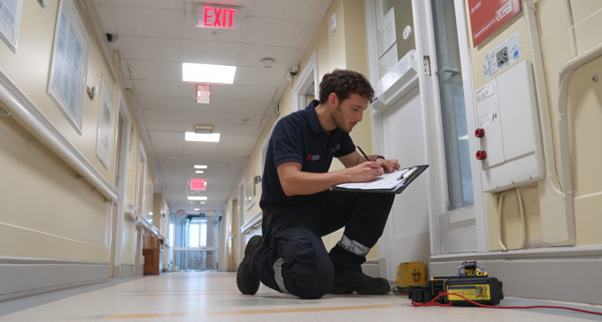
The upside is strong. With consistent layouts, a standard size, height and spacing of panels, it is easier to prove compliance with electrical codes. Inspectors begin to identify patterns and believe the details.
Selecting the Appropriate Access Door for Your Application
Start with the type of wall or ceiling, and then what is behind it and how often someone is going to be opening it. A crowded mechanical room wall concealing feeders requires a different solution than a low voltage chase that is seldom used.
Security matters too. In settings such as schools or in behavioral health areas, tamper resistant hardware may be implemented, for example, but devices and equipment still need to remain readily accessible where safety requirements dictate. That balance can be tricky.
Labeling helps everyone. Clear tags relating to panel schedules, one lines or digital records, reduce key or special knowledge barriers and keep staff from guessing which opening serves what.
Inspection, Testing and Long Term Maintenance
When conducting inspection, officials will be looking to identify clear access, the correct ratings and an obvious way in which any latch or hardware will operate. If they are not able to determine how to open something as quickly as possible, questions will be asked.
After handover, facility teams inherit whatever was built. Panels that are blocked, painted shut, or tied into complicated locking systems make maintenance harder.
A final walk-through with facility staff—opening every panel and reviewing its purpose—helps identify future problems early.
Practical Design and Construction Check-list
- Identify all electrical, lighting and control components to which access is required
- Verify applicable NEC, NFPA, life safety code, local codes
- Determine the rated walls and ceilings and select appropriate fire rated or non-rated panels
- Indicate all necessary openings in plans and details using obvious tags
- Coordinate locations with structure, ceilings and nearby egress door assemblies
- Review sizes relative to real tools, test gear and technician reach
- Confirm hardware, electrified hardware and access control system or doors with access control details
- Walk the job prior to closure and capture photos for as builds and for future maintenance
Common Mistakes to Avoid
The same things are still seen happening over and over again. Rated corridors require rated panels, which designers forget. Contractors move boxes in the field without moving the designed opening. Someone painted a panel in a lobby because it looked ugly.
Locked egress doors or panels that are tied into control egress features without proper panic hardware or door hardware coordination can also cause safety and compliance issues. If a fire alarm or loss of power is required, test a door to release. Do not assume.
Ignoring small details such as exit access sightlines, exterior lighting around exits, or how access control or locking systems behave in the case of power failure can quietly break code requirements for doors and overall safety and efficiency.
How to Document Compliance as an AHJ and an Owner
Good documentation is a friend when questions arise as to code compliance or compliance with safety standards. Clear drawings that indicate where the openings are, ratings, and other close egress paths make it easy for authorities and owners to see the intention.
For closeout, include product data for panels and ratings as well as any electrified hardware that ties in with access control or control egress functions. Link those to panel schedules and equipment lists so people can trace the electrical power and control paths.
For commercial buildings with complex electrical systems, leave a simple matrix that connects each of the openings with specific requirements from codes and standards, safety codes and local requirements. It is not fancy, but it does support maintaining compliance and resists future safety issues.
Frequently Asked Questions
When do we need a fire rated panel electrical or lighting systems?
Use a rated panel where it penetrates a rated wall or ceiling and is to protect electrical equipment or wiring.
Can we hide junction boxes behind drywall with no opening?
Only where requirements of code will permit and where complying with electrical codes does not require ready access for service.
How large should an opening be in drivers or junction boxes?
Large enough to allow for safe reaching, using tools and avoiding electrical shocks or awkward body positions while performing work.
Who makes opening location decisions on a project?
The design team sets the intent, however it is the field coordination by trades and AHJs that finalize locations and details.
And how does this have an impact on life safety and egress?
Poor planning can hijack means of egress, exit access, and egress door hardware resulting in actual safety hazards to every occupant.
Final Thoughts
Access doors are not cosmetic details. They are part of a building’s compliance system.
When planned early, coordinated properly, and documented clearly, they reduce risk, protect occupants, and lower long-term costs. When overlooked, they lead to rework, delays, and ongoing maintenance problems.
Good access planning is not extra work. It is basic risk management for electrical and lighting systems.
Share our story - the 2025 version is available