
 Feedback
What Are the Emerging Standards & Codes Shaping Access Panel Requirements in 2026?
Posted by Best Access Doors on 12th Jan 2026
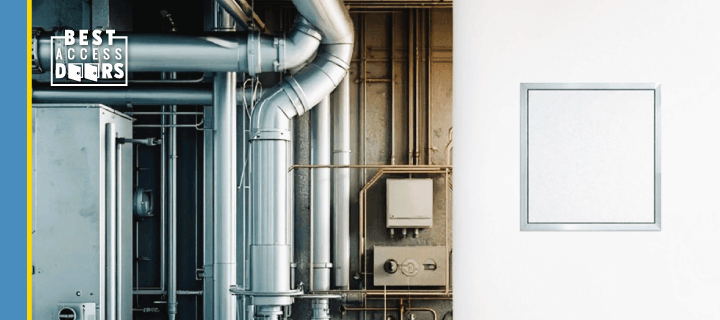
Access panel requirements in 2026 are being shaped by fire compliance, electrical access, and energy efficiency updates.
The International Building Code (IBC) updates tighten fire-resistance continuity requirements, while the NEC changes expand electrical working-space and accessibility rules. At the same time, the energy codes increase building-envelope airtightness standards.
More than ever, access panels are now considered essential parts of rated walls, electrical assemblies, and building envelopes. For instance, before 2026, code officials sometimes allowed local interpretation of tested components for rated assemblies. In 2026, the IBC access panel requirements will be clarified and enforced more uniformly.
For general contractors and mechanical subcontractors, this means that panel selection and verification must happen during the pre-construction phase. Otherwise, they risk rejection of their submittal or failed inspections.
Which 2026 Code Updates Change Access Panel Specifications on Commercial Projects?
The 2026 updates affecting access panels on commercial projects focus on three main areas:
- Electrical Working-Space & Access Rules (NEC, Article 110.26)
- Fire- and Smoke-Rated Assembly Requirements (IBC / ASTM / UL Standards)
- Energy, Envelope, and Conditioned-Space Standards (IECC / Energy Codes)
Below, we discuss each of these changes in detail.
1. Fire- and Smoke-Rated Assembly Requirements (IBC / ASTM / UL Standards)
Fire-rated access panels in 2026 must be "system-matched" to the specific duration and material of the wall or ceiling assembly they penetrate. An opening in a 2-hour fire barrier, for instance, must be protected by a panel that has been tested to ASTM E11 or UL 263 standards.
This ensures the assembly's integrity remains intact with no heat transfer or flame spread.
If you install a non-rated panel in a rated shaft wall, fire and smoke will bypass the floor-to-floor separation. In 2026, fire-rated wall access panel requirements demand that inspectors be more stringent about verifications. This helps eliminate inconsistent enforcement across jurisdictions.
For instance, labels like the UL Label or the Warnock Hersey mark on the access panel are a requirement across the board. These help verify that the panel, including its insulation and self-closing mechanism, was tested as a complete unit.
Special attention is required for smoke barriers in healthcare and institutional settings. These assemblies often require panels with specialized smoke gaskets to prevent the leakage of toxic gases through small gaps in the frame in case of a fire.
Ready to find the right fire- and smoke-rated access panel? Explore our full range of 2026 code-compliant access panels designed for rated walls and ceilings. Browse panels with UL/ASTM certifications, self-closing hardware, and smoke gaskets to simplify inspections and ensure compliance.
2. Electrical Working-Space & Access Rules (NEC, Article 110.26)
The 2026 NEC clarifies that all electrical equipment must maintain an unobstructed working space. Access panels should be measured with the door open at a 90-degree angle. Any obstruction that reduces clearance is considered a violation, especially for heavy equipment doors.
Contractors often make the mistake of sizing a panel based on the valve or damper it serves. The method fails to account for the service clearance required for the tool and the technician's arm. Now, specifiers must ensure that panels provide full egress and tool clearance for maintenance personnel to ensure safe and efficient maintenance.
If a panel is intended for use by a person with disabilities in a public-facing area, it must also satisfy the "one-hand operation" rule, which requires no more than 5 pounds of force to open.
The new NEC clearance rules mean that contractors should be keener on commercial access panel specification
Specifying an access panel, such as the BA-IVHKL Invisa Hatch, for instance, ensures maximum clearance and versatility for various non-rated walls and ceilings. The detachable hatch features a touch latch that enables the team to secure these clearances before the drywall is installed.
It also features a durable aluminum construction, an air- and dust-resistant gasket, and a recessed design to ensure a virtually invisible finish.
When planning MEP access, BIM coordination is crucial. A panel that meets code on paper may fail in the field if a structural beam or another trade's conduit blocks it.
Request a quote for BA-IVHKL for your next bid package and coordinate lead times and access panel submittal requirements early. Got an odd opening? We offer custom sizes that can be tailored to your unique project needs.
3. Energy, Envelope, and Conditioned-Space Standards (IECC / Energy Codes)
Energy codes and standards in 2026 still view every access panel as a potential "thermal bridge" or air leak. In exterior-adjacent walls or attic hatches, panels are now required to match the R-value of the surrounding insulation. More importantly, they're required to provide an airtight seal to maintain the building's thermal envelope.
On cold-climate projects, using a standard uninsulated panel can lead to condensation, mold, and energy loss. The latest standards favor insulated access panels with thick mineral wool or foam cores and EPDM rubber gaskets.
These features ensure that the building's HVAC system doesn't have to work overtime to compensate for air infiltration through "leaky" access points. Furthermore, for projects seeking LEED v4.1 or higher, the documentation of these panels must be included in the green building submittal package.
Related: How To Choose Panels That Match Your Climate & Code
What Documentation Should Be Included in Access Panel Submittals to Avoid RFIs and Inspection Delays?
A 2026 code-compliant submittal must include the manufacturer's cut sheet, third-party testing certifications (UL/ASTM), and specific "Installation Guidelines". These instructions must demonstrate how the panel maintains the assembly's rating.
For rated assemblies, the submittal should clearly specify the fire-resistance duration (e.g., 90 minutes or 120 minutes) and include details about the self-closing hardware. To avoid the "late substitution" trap, submittals should also include:
- Acoustic Ratings (STC): If the panel is in a sound-rated corridor or office.
- Material Gauges: To ensure durability in high-traffic institutional environments.
- LEED Data: If the project has sustainability requirements.
- Clash Coordination Notes: Verification that the panel size allows for the required service clearance of the specific MEP equipment behind it.
- Thermal/Envelope Performance Data/Energy Compliance Submittal: Verifies that an access point meets thermal performance standards.
By front-loading this documentation, estimators ensure that the "allowance" for access panels doesn't turn into a "change order" for expensive, expedited fire-rated units later in the schedule.
Frequently Asked Questions About 2026 Access Panel Requirements
1. What are the 2026 fire-rated access panel requirements for commercial buildings?
In 2026, fire-rated access panels must match the fire duration and material of the wall or ceiling assembly where they are installed. Panels require UL or Warnock Hersey certification and self-closing hardware. They also require smoke gaskets for sensitive areas, such as healthcare, to ensure compliance with IBC, ASTM, and UL fire standards.
2. How do NEC 2026 electrical codes affect access panel placement?
The 2026 NEC mandates unobstructed electrical working space. Contractors must measure panel clearance at a 90° angle. For public-facing panels, one-hand operation and a force of under 5 pounds is needed to ensure safe and code-compliant maintenance access.
3. Which access panels meet the 2026 energy code and thermal envelope standards?
2026 energy codes require insulated access panels that match surrounding R-values and provide airtight seals. Mineral wool or foam cores with EPDM gaskets prevent thermal bridging, condensation, and energy loss, supporting HVAC efficiency and LEED v4.1 or higher sustainability requirements.
4. What documentation is needed for 2026 access panel submittals?
A compliant submittal should include manufacturer cut sheets, UL/ASTM certifications, installation instructions, fire-resistance duration, acoustic ratings, material gauges, LEED data, clash coordination notes, and thermal performance info. Complete documentation avoids RFIs, inspection delays, and costly late substitutions.
5. How should contractors coordinate MEP access with 2026 code panels?
Contractors must verify panel placement during pre-construction using BIM coordination to avoid clashes with beams or conduits. Panels must allow full-service clearance for tools and personnel, meet NEC and IBC requirements, and ensure proper installation in rated or conditioned walls and ceilings.
Conclusion
In 2026, the "right" access panel is the one that supports a project's compliance needs. By treating these components as integral parts of fire, energy, and accessibility systems, contractors can avoid the rework and inspection failures that often arise during the final 5% of a project.
Whether you are coordinating MEP access in a hospital or maintaining the thermal envelope of a high-rise, the key is to identify assembly requirements early. At Best Access Doors, we help you specify the right access doors and panels to ensure compliance with the latest access panel codes and standards.
Contact our team to confirm the application's fit, documentation requirements, and specification details before releasing it for construction. Call us directly at +1-888-327-5471.
Share our story - the 2025 version is available