
 Feedback
How to Use AI to Choose the Right Access Door or Access Panel
Posted by Best Access Doors on 31st Aug 2026
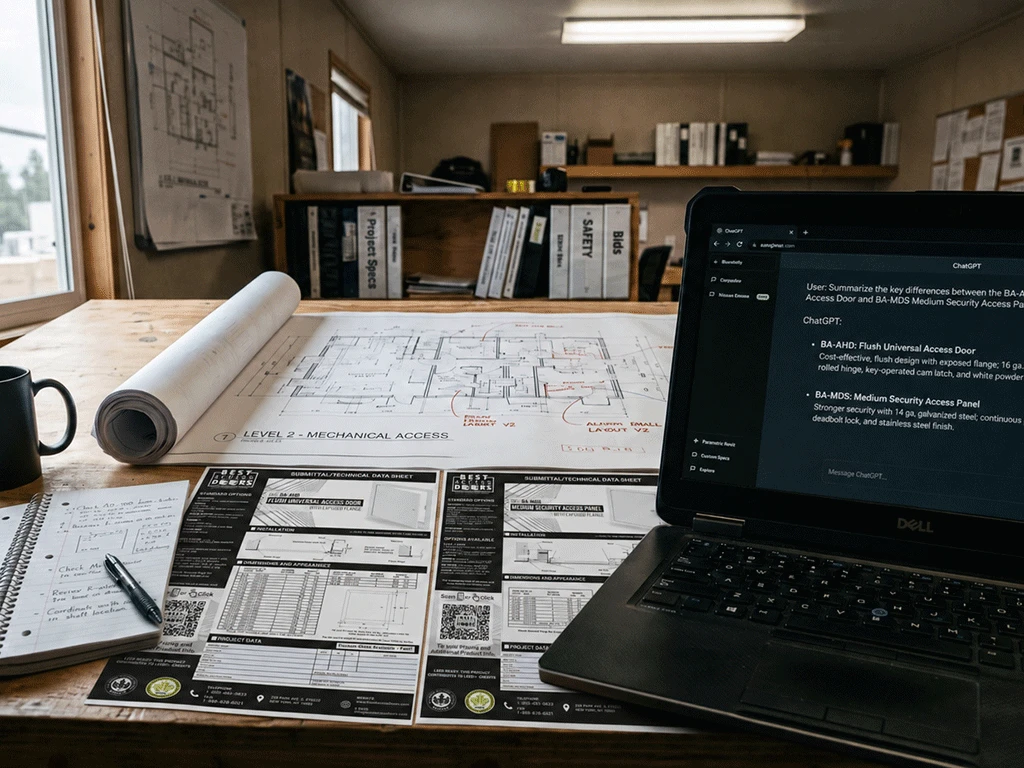
Choosing the right access door or access panel is not just about finding the right size.
Contractors also need to confirm the installation location, the system requiring access, whether a fire rating applies, the finish type, and the project documents to be checked before ordering. When those details are missing, product selection takes longer, quotes get delayed, and orders come back wrong.
This is where AI can help. AI tools like ChatGPT can organize rough project notes into a clearer access panel checklist, flag missing details, and prepare better supplier questions before you request a quote.
This guide explains what details to gather, how AI can help organize them, and when to reach out for product support so you can choose the right access door.
What Details Do You Need Before Choosing an Access Door?
These are the eight details contractors should confirm before choosing an access door or access panel:
- Wall or Ceiling Application: Confirm whether the access point is in a wall or a ceiling, and whether it is interior or exterior. The installation location affects which product types, frames, and hardware options are available.
- System Requiring Access: Identify what the access door needs to reach: HVAC, plumbing, electrical, valves, controls, or a life-safety system. The system type often affects the opening size and how frequently the panel will be used.
- Fire Rating Requirement: Determine whether the wall or ceiling is fire-rated. If it is, the access door must match the required rating. Don't rely on AI to confirm fire rating compliance. That verification needs to come from official product submittals, manufacturer documentation, and your local AHJ.
- Rough Opening Size: Confirm the rough opening size on-site or from project documents. A standard-size access door works for many applications, but if the opening does not match a standard size, a custom-size door may be needed to avoid rework.
- Finish Type: Match the finish to the installation area. A paintable or primed steel door works for most interior applications. Stainless steel may be required for moisture-prone, wash-down, or food-grade environments. Meanwhile, drywall inlay doors work where the panel needs to blend into the surrounding finish.
- Environment: Consider what the area around the access point involves: moisture, wash-down cleaning, exterior exposure, corrosion, high traffic, or public-facing spaces. A drywall access panel in a clean interior ceiling has different requirements from a metal access door in a commercial kitchen or mechanical room.
- Service Frequency: How often the access point will be used affects hardware, latch type, and durability. An access point used for occasional inspections has different needs from one that maintenance staff will open regularly.
- New Construction or Retrofit: In new construction, access locations can be coordinated before walls and ceilings close. In a retrofit, contractors may need to work around existing openings, finished surfaces, and limited clearances. Retrofit projects are more likely to need custom sizing or additional framing.
If you are still in the planning phase, planning maintenance access before construction closes in can help you catch gaps before they become costly fixes.
How Can AI Help You Organize Important Product Details?
AI tools like ChatGPT can take rough project notes and turn them into a structured access panel checklist. This is the same information a product rep or estimator would ask for, organized before the call so the conversation moves faster. It's one of the more practical ways contractors are saving time on construction work.
Turning Project Notes into a Checklist
Paste your rough notes into an AI tool and ask it to identify which of the eight details above are missing.
For example, your notes may say:
Ceiling access near HVAC. Client wants clean finish. Confirm opening size. Maybe fire-rated. Need quote. Check if standard size works.
From those notes, AI can flag that the ceiling application, fire rating, and opening size still need confirmation before ordering.
Generating a Product Question List
AI can also produce a list of questions to ask a supplier or product expert before placing an order. This reduces back-and-forth and makes the first conversation more productive.
Instead of starting from scratch for each job, the access door selection guide serves as a reusable pre-order step.
What Can AI Not Confirm Before You Order?
AI does not know current stock levels, lead times, or fire rating certifications. It cannot confirm whether a product meets the requirements for a specific wall or ceiling assembly, jurisdiction, or AHJ. It organizes the information you give it. Product specs and submittals still need to be verified directly against official documents.
Copy/Paste Prompt: Access Door Selection Checklist
Use this prompt when you need to organize project details before choosing an access door or access panel.
Copy/Paste Prompt:
Act as a product selection assistant for access doors and access panels. Based on the project notes below, create a checklist of details I need to confirm before choosing a product.
Organize the checklist by category:
- Application: wall, ceiling, floor, interior, exterior
- System requiring access: HVAC, plumbing, electrical, valves, controls, life-safety systems, or other
- Opening details: rough opening size, finished opening size, depth, clearance
- Rating requirements: fire-rated, non-rated, insulated, gasketed, or other
- Material and finish: steel, stainless steel, aluminum, drywall inlay, plastic, or other
- Environment: moisture, wash-down, corrosion, exterior exposure, high-traffic area
- Use frequency: occasional access, frequent maintenance, inspection access
- Security needs: lock type, tamper resistance, restricted access
- Project stage: new construction or retrofit
- Questions to ask before ordering
Do not recommend a final product unless the needed details are provided. Mark missing details as "Needs confirmation."
Project notes:
[Paste notes here]
After running the prompt, review the output against your actual project drawings and confirmed measurements before sharing it with a supplier.
A Contractor Example: Multi-Unit Access Door Order
A mechanical contractor is managing access door orders for a multi-tenant commercial building. The mix of locations raises the classic question of drywall access panel vs metal access door.
Instead of calling the supplier with incomplete information, the contractor pastes the location-by-location notes into an AI tool using the prompt above. The checklist flags that three locations need fire-rated doors, two locations need stainless panels for the wet areas, and four opening sizes still need to be confirmed on-site.
The checklist doesn't select the products. But it identifies the gaps before the call, so the supplier conversation is faster and the order comes back right the first time. The contractor then contacts Best Access Doors to confirm the fire-rated door specifications and pull the submittals needed for those three locations.
When Should You Stop Using AI and Call a Product Specialist?
AI is a good organizer, not a product expert. There are specific situations where contractors should stop using AI and contact product support directly:
- The project involves a fire-rated wall or ceiling assembly.
- The rough opening has irregular dimensions or clearance issues.
- The application needs a custom-sized access door.
- The environment involves moisture, wash-down, exterior exposure, or corrosion.
- The AHJ or project authority has specific requirements for the opening.
- The checklist raises questions that cannot be confirmed from the project notes alone.
In these situations, talking directly to someone who knows the product line saves more time than any AI tool can. The access door selection guide AI produces is a starting point, not a sign-off.
Final Thoughts
AI can help contractors choose the right access door or access panel by organizing project notes into a clearer checklist.
It can help identify missing details, prepare supplier questions, compare product requirements, and reduce back-and-forth before requesting a quote.
The key is to keep AI in the right role. Use it to organize information and prepare better questions. However, don't use it as the final authority on product approval, code compliance, fire ratings, or project requirements.
When the project details are clear, it is easier to choose the right access solution.
Get Help Choosing the Right Access Door
Not sure which access door or access panel fits your project?
The Best Access Doors team can review your details and help you find the right product before you order. Share your opening size, application, fire rating requirement, and finish, and the team will take it from there. Get in touch now for product support.