
 Feedback
Fire-Rated Access Doors: 1-Hour vs. 2-Hour vs. 3-Hour
Posted by Best Access Doors on 23rd Sep 2026
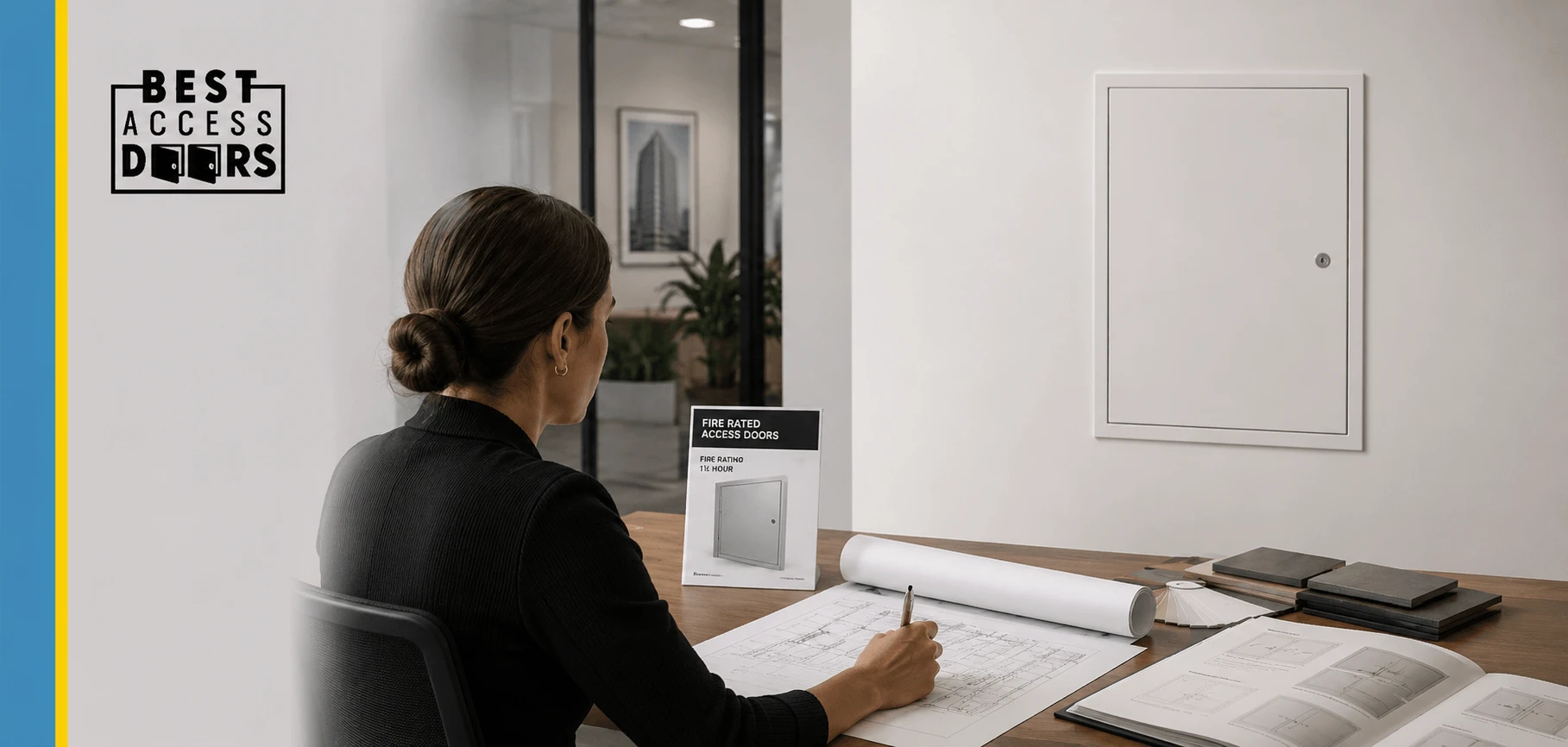
A 1-hour, 2-hour, and 3-hour fire rating should not be read like bronze, silver, and gold. The correct fire-rated access door is the one documented for the assembly your project requires. So, more hours do not automatically mean better compliance, performance, or a better fit for your project.
If you specify the wrong rating for the wrong assembly, your access door will ultimately fail inspection or create a liability gap that surfaces long after installation. As a result, you need the rating and listed configuration required by the surrounding assembly and project documents.
NOTE: Fire-rated access doors do not stop fires from starting; they help slow down the spread of a fire for a limited period.
What the Hour Number Does Tell You
The hour designation describes performance under a defined fire test. UL notes that fire-resistance-rated walls and opening protectives are tested for related but different purposes. Therefore, a 1-hour fire rated access panel may carry a different documented rating than a 2-hour fire rated access door depending on the wall or ceiling condition and the standard under which it was evaluated.
What the Hour Number Does Not Tell You
The rating alone does not confirm:
- Whether the exact model is approved for a wall, ceiling, or both
- Whether the maximum available size covers your service opening
- Whether the assembly is insulated or uninsulated
- Which latch, hinge, closer, or frame conditions are required
- Whether the product is suitable for the specific construction shown on the project documents
| If the documents call for... | Your next question should be... |
|---|---|
| 1-hour rated condition | Which listed product/size matches this exact wall or ceiling assembly? |
| 2-hour rated wall | Is the proposed model documented for the vertical opening and required size? |
| 2-hour rated ceiling | Is there a ceiling-specific listing and operating configuration? |
| 3-hour requirement | Is the 3-hour claim tied to this application or another assembly? |
WATCH OUT: Watch out for “upgrade the rating” logic. Ordering a product with a larger hour number can still be wrong if the listing, orientation, size, or installation condition does not match the project.
How to Review a Schedule with Mixed Ratings
You can review a schedule with mixed ratings by grouping the openings by rated assembly and location before comparing model numbers. A schedule may look standardized because one product family appears repeatedly, but standardization should follow compatible conditions, not the other way around.
Separate wall and ceiling conditions when the documentation requires it, then standardize within those groups. A model listed for a 2-hour rated wall is not automatically suitable for a 2-hour rated ceiling.
If you're stuck, you can share your project’s rating, assembly, size, and documentation requirements, and our team will help narrow the appropriate fire-rated access door options before procurement.
What Sizes and Materials Are Available for Fire-Rated Access Doors?
Fire-rated access doors are available in steel and stainless steel. Most stainless steel models carry a #4 satin finish while steel models come with a prime coat of rust-inhibitive powder-coated baked enamel.
Standard sizes typically range from 12" x 12" up to 48" x 48", with availability depending on the rating and listed assembly. Size availability also varies by installation orientation (wall and ceiling configurations do not always share the same maximum size).
If your required size falls outside the standard range, you can send a custom quote request, and our team will help you find the right configuration for your assembly.
FAQs
1. Do I always need a higher fire-rated access door rating for a more critical space?
Not necessarily. The required rating is set by the surrounding rated assembly and the project documents, not by the perceived importance of the space. For example, a 1-hour rated wall requires a 1-hour listed opening protective. Installing a 3-hour fire rated access door in that assembly does not improve compliance and may introduce documentation problems if the listing conditions differ.
2. Can the same fire-rated access door be used in both a wall and a ceiling?
Only if the exact model, size, and configuration are documented for both applications. Wall and ceiling installations are tested differently, and a product listed for one is not automatically listed for the other. Verify the technical sheet and listing for the specific orientation before specifying.
3. What sizes are available for fire-rated access doors?
Standard sizes typically run from 12" x 12" up to 48" x 48", with availability depending on the hour rating and listed assembly. For openings outside the standard range, submit a custom quote request and our team will help you find the right configuration.
4. Does insulation affect the fire rating of an access door?
Not automatically. Insulation and fire rating are separate product attributes. An insulated access door is not necessarily fire-rated, and a fire-rated access door is not necessarily insulated. Some models combine both, but the listing must document the specific insulated and fire-rated configuration together.
5. Who determines which fire rating is required?
The applicable building code and the project documents set the requirement. The manufacturer then documents which products are listed for which assemblies.
Find the Right Fire-Rated Access Door for Your Assembly
Not sure which fire rating or configuration your project needs? Download our fire-rated guide to get a quick project-side checklist. For approval, use the exact technical sheet and listing for the proposed model and size.