
 Feedback
How to Standardize Access Panels across Commercial Construction Jobs
Posted by Best Access Doors on 26th May 2026
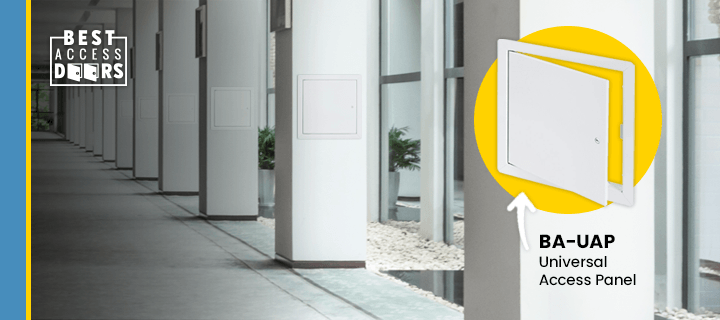
You can standardize access panels across commercial construction jobs by specifying a single universal panel for standard non-rated applications.
This creates consistent procurement processes that eliminate SKU variation and coordination gaps across all your projects. It also introduces repeatable installation practices that reduce delays and simplify long-term maintenance planning.
In this article, we'll explore why material standardization matters for commercial access doors and panels and how inconsistent specifications can drive up project costs. We’ll also show you how to select the right panel for standardization across all your construction projects.
Why Does Standardizing Access Panels Across Multiple Construction Projects Matter?
As mentioned, standardizing access panels across multiple projects is important because it aligns specifications across your entire portfolio. This reduces SKU variation at the procurement level and eliminates coordination gaps that slow down multi-trade installations.
When you establish a single model as your go-to solution for standard non-rated applications, you create material consistency that streamlines every phase of your projects. As a result:
- Procurement workflows become simpler because your purchasing team orders the same product repeatedly, reducing time spent comparing submittal packages or chasing outdated technical data sheets.
- Estimators price jobs more accurately using known quantities and established supplier relationships rather than researching new products for every bid.
- Installation crews work faster when they're familiar with one product mounting system, latch operation, and finish quality across floors, phases, or projects.
- Project scalability improves when you're not reinventing the wheel for every building.
A universal access panel, like BA-UAP, that works across drywall, ceilings, and other non-rated surfaces allows you to replicate successful specifications from one project to the next. This repeatability reduces inspection delays because building officials recognize consistent compliance patterns rather than evaluating new products on every walkthrough.
Ready to eliminate coordination gaps and reduce RFIs across your projects? Explore our access panels built for specification consistency across commercial projects.
Why Do Inconsistent Access Panel Specifications Lead to Delays and Added Costs?
Inconsistent access panel specifications lead to delays and added costs because they fracture your procurement process, multiply submittal coordination tasks, and reduce installation efficiency. The result is expensive field fixes and cascading inspection delays throughout the project.
When every trade or subcontractor specifies a different access panel based on personal preference or what's immediately available, the inefficiencies compound across five areas.
1. Your Access Panel Procurement Strategy Becomes Fragmented
When purchasing teams end up managing relationships with multiple suppliers, each with different ordering systems, lead times, and minimum order quantities, the complexity adds up fast.
Also, purchasing access panels in bulk stops making financial sense because your orders are split across manufacturers, and volume discounts disappear.
2. Submittal Coordination Starts to Break Down
When each product requires separate technical documentation, fire ratings verification (or confirmation of non-rated applications), and compliance review, the administrative workload grows quickly.
Submittals are then kicked back because the specifications don't match what was actually ordered, or because trades didn't follow the project manual.
3. Installation Takes Longer across the Board
When crews working across multiple floors encounter different mounting systems, latch types, and finish qualities, their pace slows considerably.
For example, what takes 15 minutes to install on Floor 2 might take 25 minutes on Floor 5 simply because the product is unfamiliar. Multiply this across dozens or hundreds of panels, and the time wasted increases significantly.
4. Inspections Take More Time Than They Should
When building inspectors have to spend extra time evaluating whether each different panel model meets code compliance for its intended application, your schedule takes a hit.
For those managing mega commercial builds with tight timelines, these delays can cascade into substantial cost overruns across the entire project.
5. Long-Term Maintenance Becomes a Headache
When facility managers inherit buildings with mixed panel inventories, day-to-day operations become more complicated than they need to be.
Stocking replacement parts becomes harder, and coordinating future access needs during renovations or system upgrades takes significantly more time and effort.
How Can Contractors Choose the Right Access Panel for Standardization across Jobs?
Contractors can choose the right access panel for standardization by evaluating its versatility of use, construction quality, installation efficiency, code compliance, and finish consistency across typical commercial building projects.
- Application versatility: The panel must work on both vertical and horizontal non-rated surfaces. This includes walls and ceilings in drywall or similar materials.
- Construction quality: Look for heavy-gauge steel construction (16-gauge or better), continuous or concealed hinge systems that prevent sagging, and quality finishes that maintain appearance over time.
- Installation efficiency: Panels with exposed flanges and simple mounting systems install faster than recessed models, which require precise cutouts. A cam latch system, operated with standard tools, reduces the need for specialized hardware or keys across multiple buildings.
- Code compliance: While fire-rated assemblies require specific rated panels, your standard non-rated panels should clearly meet building codes for non-rated applications. LEED V4 compliance also matters for projects pursuing green building certification.
- Availability and lead time reduction: Standardize on a panel that's readily available in common sizes (6"×6" through 24"×24" and beyond) with short lead times for custom dimensions to keep your projects moving.
- Finish consistency: A high-quality powder coat primer finish that accepts paint well ensures panels blend into finished surfaces across different buildings and design specifications.
Why Do Contractors Choose the BA-UAP as Their Standard Non-Rated Panel?
Contractors choose the BA-UAP Universal Access Panel as their standard non-rated panel because it offers universal application capability, durable construction, simple installation, and LEED V4 compliance.
Let’s look at its core features in detail.
Universal Application
The BA-UAP access panel installs on non-rated vertical and horizontal drywall surfaces, plaster, and other common commercial wall and ceiling materials. This eliminates the need to stock separate ceiling and wall panels, as one product handles both.
Installation Precision
Accurate factory measurement and the 3/8" return design ensure consistent rough opening calculations (door size + ¼") across your projects. This helps installers know exactly what to cut, so the panel fits the first time, reducing field adjustments and callbacks.
Durable Construction That Prevents Sagging
Built with 16-gauge cold-rolled steel and a 1½" frame depth, the BA-UAP access panel provides construction quality that prevents sagging, which is a common problem with lighter-gauge panels.
The hidden pin hinge (continuous piano-type on doors over 24") and rounded mitered corners create a flush installation that sits nearly invisible against finished surfaces.
Standardized Access Control
The screwdriver-operated cam latch eliminates key management issues across multiple job sites while providing secure access. As a result, your maintenance crews don't need different tools or key sets for different buildings.
When applications require different security levels, optional upgrades include the following:
- Key-operated cylinder cam latches
- Hex head variants
- Pinned hexhead cam latches
- Handle-operated systems for different security levels
Green Building Support
BA-UAP contributes to LEED V4 compliance and green building certification requirements. This is important for commercial projects pursuing sustainability goals or tenant demands for certified spaces.
Finish Quality
The high-quality white powder coat primer accepts paint readily, allowing the panel to blend seamlessly with any finish color scheme.
It also provides corrosion resistance that supports long service life when maintaining commercial buildings. Optional stainless steel 304 with a #4 brushed finish accommodates projects with premium aesthetic or corrosive environment requirements.
Planning your next commercial build? Request a quote for bulk panel orders or explore our custom access panel options that fit your specialized project needs.
If you’re also managing multiple projects year-round, you can join our Pro Club for free to get quicker quote turnaround, priority order processing, and dedicated account support that scales with your portfolio.
Frequently Asked Questions on Standardized Access Panels
1. How does using a universal access panel improve procurement efficiency?
Using a universal access panel improves procurement efficiency by consolidating your purchase around a single SKU. This simplifies vendor relationships, improves inventory management, and delivers better pricing leverage through consistent volume orders.
2. How do you handle situations where a specific project requires fire-rated access panels?
Fire-rated walls and ceilings require fire-rated panels that have been specifically tested and listed. That said, you can maintain your standardized non-rated panel for general applications and add fire-rated models only where code specifically requires them.
3. Can using the same access panel across all projects create problems if one building has different requirements?
No. A truly universal access panel designed for versatile non-rated applications can handle most standard situations. However, custom solutions are better for specialized needs such as exterior installations, high-security areas, food service, or healthcare environments.
To Sum It Up
Standardizing access panels across construction projects delivers improvements in procurement efficiency, installation consistency, and commercial building maintenance planning.
When you eliminate unnecessary SKU variation by establishing a universal panel for standard non-rated applications, you reduce the coordination gaps and specification inconsistencies that drive up project costs and timelines.
Contact our team or call +1-888-327-5471 to order standardized access panels that cut down procurement time, reduce installation errors, and protect your margins.